Shimane · 2 h 01 from Matsue · Onsen town

Tattoo friendly onsen in Yunotsu

Yunotsu is a single preserved street of ten-room houses, and not one operator here publishes a tattoo rule, partly because several of them barely publish anything. What the town has instead is private bathing at an unusual density for its size. Kiunso hands its family bath to guests for nothing, with the key at the front desk. Nogawaya throws in its reservable tub Tanuki-no-yu when you book direct. Nakanoya has no communal bath at all, only two ground-floor family baths, and the bathhouse Yakushiyu rents a private bath by the 40 minutes.

4 properties

Private baths only

Tattoos are fine in a private or in-room bath. The communal baths are restricted, or the policy is unconfirmed. What this means

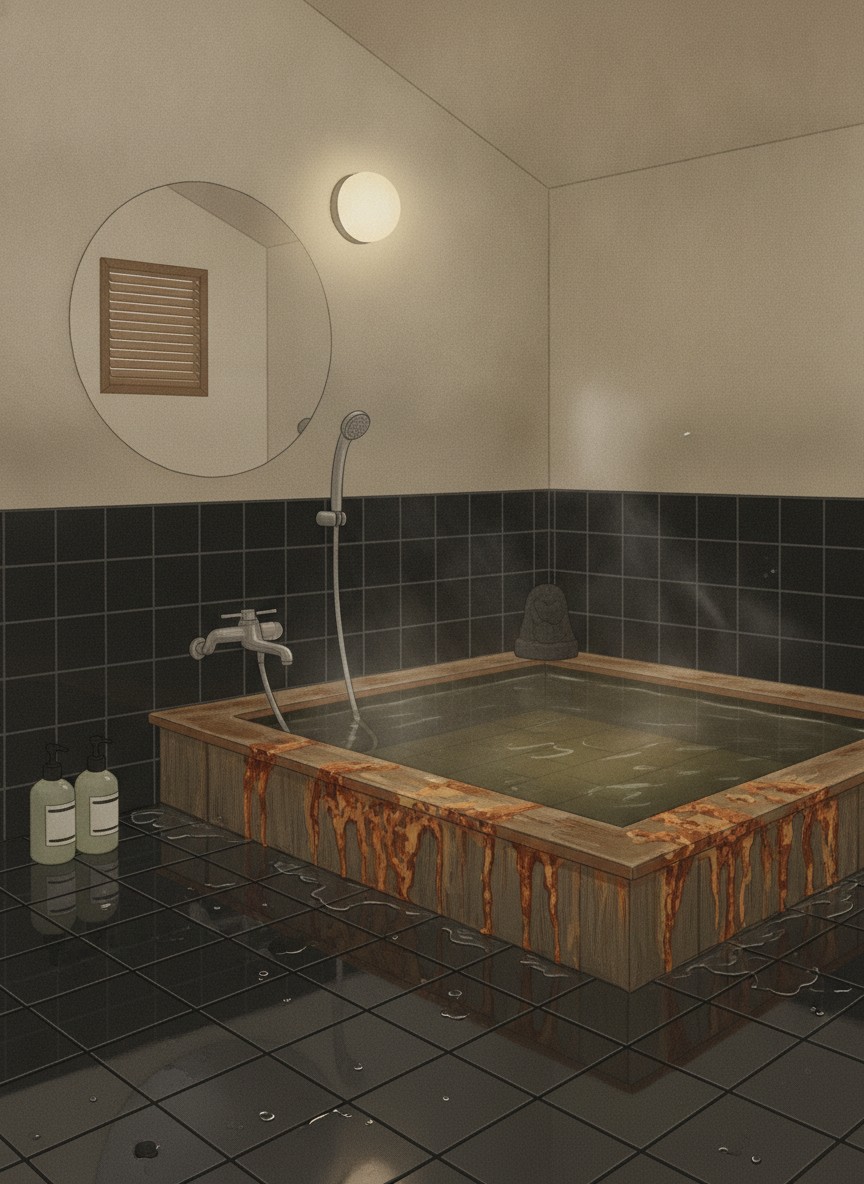
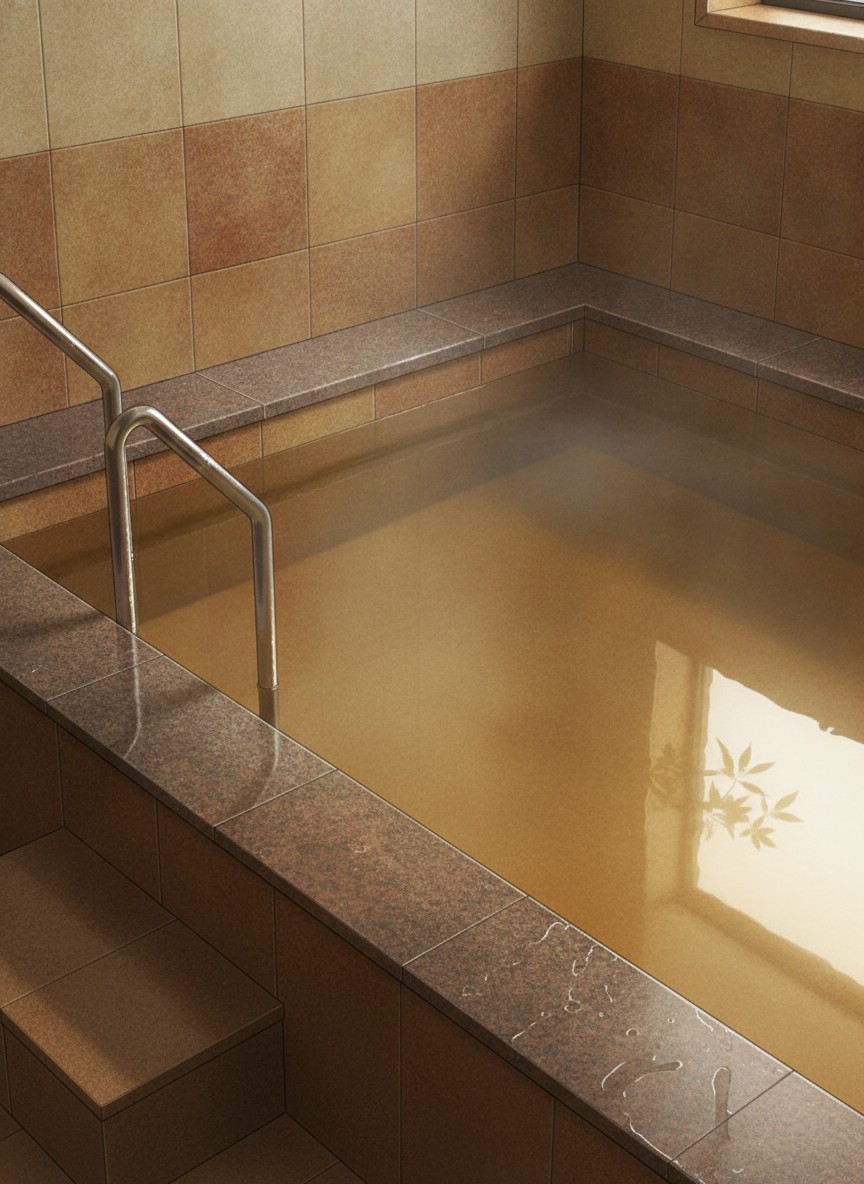
Illustration of Kiunso in Yunotsu, at the upper end of the preserved street beside Motoyu
Yunotsu, at the upper end of the preserved street beside Motoyu Ryokan with a free reservable family bath and two old-house lets ★★★☆☆ Confirmed

Kiunso

寛ぎの宿 輝雲荘

Kiunso publishes no tattoo rule, so its two shared baths stay unanswered. The family bath, Nagomi-no-yu, is free to guests and used by one party at a time, which makes it the practical answer here. It cannot be reserved in advance: the key sits at the front desk until 23:00 and the inn suggests phoning down to check whether it is free. Day visitors who are not staying can rent that same bath, and only that bath.

Note: The family bath and the open-air bath are ceramic-mineral water on a recirculating system, not the spring; only the indoor part of the large bath is natural spring water. The inn says so itself.

Best for: A traveler who wants a private tub at no extra charge in a town with almost no private bathing

Read the water carefully here. The inn writes that Yunotsu’s supply is not plentiful, that only the indoor part of the large bath is natural spring water on free flow, and that the open-air bath and the family bath are ceramic-mineral water on a recirculating system. So the private tub is warm water, not the spring, and the inn says so itself. Day-use of the family bath costs ¥500 for an adult, ¥300 for a primary schooler, ¥200 below that and nothing under three. Kiunso also lets two old houses on the street, Seisenkan and Hosen Nagaya, whose guests walk to the main building to bathe.
Kiunso tattoo policy → Check availability
Illustration of Nogawaya in Yunotsu, on the lower stretch of the preserved street
Yunotsu, on the lower stretch of the preserved street Taisho-era ryokan of ten rooms with a reservable bath on pure source water ★★★☆☆ Confirmed

Nogawaya

のがわや旅館

No tattoo rule is published, which leaves the two shared baths an open question. The reservable bath, Tanuki-no-yu, is the answer: one party at a time, on 100 percent free-flowing spring water, which the inn points out is rare for a private tub anywhere in Japan. Book direct through the inn’s own site and the bath is thrown in at no charge, which is worth knowing before clicking through an agency.

Best for: A tattooed guest who wants the real spring rather than a heated substitute

The shared baths, Iwaburo and Ishiburo, each hold two tubs side by side, one on spring water and one on a treated recirculating system, because the inn says the spring yields too little to fill a large tub. Its water is piped from the Yakushiyu source. Winter can bring some dilution for temperature. The building is a repaired Taisho house and dinner is served in the room.

Nogawaya tattoo policy → Check availability
Illustration of Nakanoya Ryokan in Yunotsu, down a side lane off the main street
Yunotsu, down a side lane off the main street Small traditional inn whose only baths are two family baths ★½☆☆☆ Confirmed

Nakanoya Ryokan

なかのや旅館

There is no shared bath at Nakanoya to make a rule about. The inn has two family baths on the ground floor, each taking up to three people, and guests use them one party at a time. They are open 6:00 to 9:00 and 16:00 to 22:00. Nothing about tattoos appears on the site, and with this layout nothing needs to.

Best for: A solo traveler who wants the cheapest private bathing in the old town

Soap, shampoo and conditioner are in the bathrooms; hair dryers are kept in the guest rooms instead. The water is a neutral chloride spring. The building is a traditional one on a back lane, renovated by a younger generation, and the inn takes rooms with a shared bath and an in-room toilet as well as Japanese-Western rooms.

Nakanoya Ryokan tattoo policy → Check availability
Illustration of Yakushiyu in Yunotsu, mid-street, opposite the old wooden bathhouse it once occupied
Yunotsu, mid-street, opposite the old wooden bathhouse it once occupied Day-use public bathhouse with a reservable private bath Confirmed

Yakushiyu

薬師湯

Yakushiyu publishes no tattoo rule for its communal bath, so that side is unanswered. It does publish a reservable private bath, taken in 40-minute turns, at ¥800 for an adult and ¥300 for a child aged one through sixth grade, and it recommends booking ahead by phone. That private turn is the dependable way in here, and it is the only reservable bath in the town’s two public bathhouses.

Best for: A traveler who wants the town’s highest-rated water without sharing the tub

The bathhouse rents a bathing garment of its own, free, at the counter, following the health ministry’s guidance on bathing wear, and it will not let you use one you brought. Its stated reason is chemical rather than social: detergent and softener left in a washed garment react with the spring, and the bath then has to be drained and scrubbed. That rule is about surgical scars, not tattoos, but it is the closest thing the operator publishes to a cover-up policy, so do not read it as one. The house took the Japan Spa Association’s top grade across all five categories, the only bath in San’in to do so. The old building across the way is now a cafe, Shinyu Cafe Naizoujo. A weekly Tuesday closing began in September 2026.

Yakushiyu tattoo policy → Find a hotel nearby →
Traveler’s note

The spring yields too little water to fill everything here, and the operators say which tubs are real. Kiunso runs its open-air bath and its family bath on ceramic-mineral water in a circuit, with only the indoor large bath on free-flowing spring water, and its listing says so. Motoyu Senyakuto, the other public bathhouse, publishes no rule and has no private tub to fall back on. From January 2026 it opens to non-members only from 6:00 to 8:00 on Mondays and Thursdays.

Getting there

Tickets for the ride in

Sold on Klook. Booking through these links costs you nothing extra and sends a small commission our way.

Common questions

Yunotsu questions

Can I use a shared bath in Yunotsu with a tattoo?

Nobody will tell you. Forty-two pages of Motoyu Senyakuto’s site carry nothing about tattoos in either direction, Yakushiyu publishes nothing for its communal bath, and no inn on the street writes a rule. That is why this page lists only baths one party uses at a time.

Which Yunotsu baths can I have to myself?

Yakushiyu rents a private bath in 40-minute turns at 800 yen for an adult and 300 yen for a child, booked ahead by phone. Kiunso’s family bath is free to guests and 500 yen to day visitors. Nogawaya has Tanuki-no-yu, and Nakanoya’s two family baths take three people each.

Is the private water in Yunotsu the real spring?

At Nogawaya, yes: Tanuki-no-yu is 100 percent free-flowing spring water, which the inn points out is rare for a private tub. Kiunso’s family bath is heated ceramic-mineral water instead. Nogawaya’s two shared baths each pair a spring tub with a treated one, for the same reason of supply.

How do I get to Yunotsu from Matsue?

Two hours with one change. Take the Yakumo, the limited express toward Izumoshi, 28 minutes to Izumoshi, then the JR San’in line local toward Hamada, 78 minutes to Yunotsu. The preserved street and its bathhouses are a few minutes’ walk from the station.

More places to bathe

Other guides

All twenty-three guides are live.

Tokyo area69 places → Osaka area39 places → Kyoto area15 places → Sapporo area11 places → Sendai area8 places → Kanazawa area12 places → Nagoya area16 places → Hiroshima area9 places → Hakone23 places → Kinosaki Onsen10 places → Kusatsu Onsen9 places → Nikko6 places → Atami7 places → Shirahama7 places → Arima Onsen8 places → Yumura Onsen3 places → Nachi-Katsuura2 places → Awaji Island4 places → Beppu Onsen32 places → Yufuin Onsen13 places → Kurokawa Onsen17 places → Ibusuki Onsen14 places → Ureshino Onsen14 places → Noboribetsu Onsen8 places → Jozankei Onsen13 places → Niseko12 places → Lake Toya5 places → Akiu Onsen7 places → Naruko Onsen10 places → Zao Onsen8 places → Nyuto Onsen4 places → Higashiyama Onsen10 places → Hanamaki Onsen10 places → Takayu Onsen4 places → Yamashiro Onsen14 places → Yamanaka Onsen14 places → Katayamazu Onsen6 places → Awazu Onsen3 places → Awara Onsen10 places → Unazuki Onsen6 places → Kawaguchiko17 places → Isawa Onsen18 places → Karuizawa13 places → Bessho Onsen6 places → Yudanaka and Shibu22 places → Nozawa Onsen10 places → Hakuba14 places → Myoko8 places → Echigo-Yuzawa13 places → Gero Onsen17 places → Okuhida Onsen14 places → Shuzenji Onsen8 places → Ito Onsen8 places → Shimoda12 places → Tamatsukuri Onsen6 places → Misasa Onsen11 places → Kaike Onsen8 places → Yunotsu OnsenYou are here Miyajima8 places → Yubara Onsen7 places → Yunogo Onsen4 places → Yuda Onsen3 places → Nagato-Yumoto Onsen4 places → Dogo Onsen15 places → Kotohira7 places → Takamatsu5 places → Iya Valley3 places →